













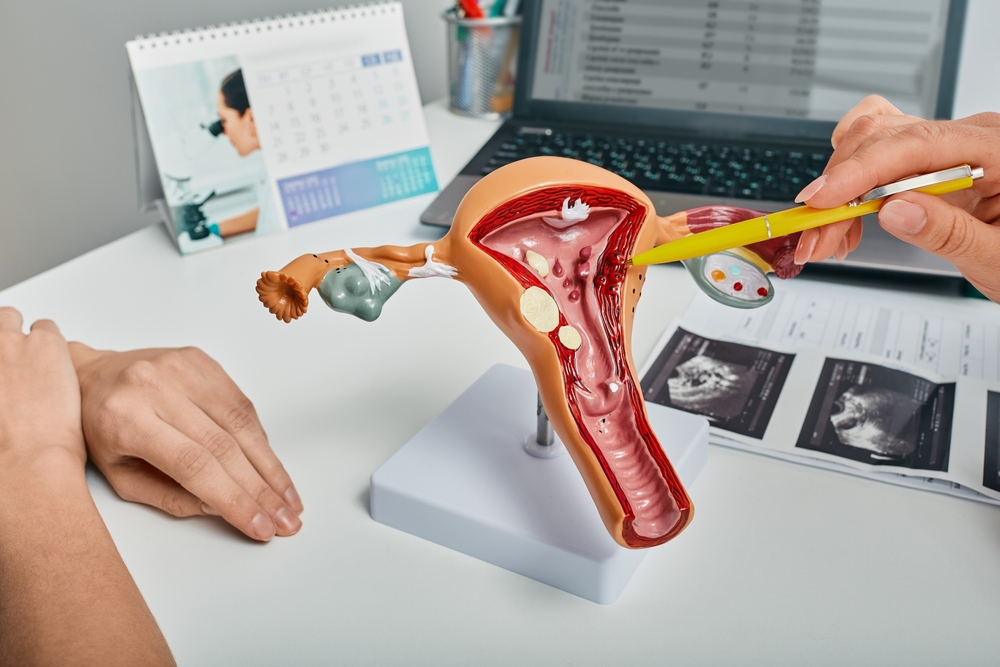
Uterine polyps are a common gynecologic condition that can cause abnormal bleeding, spotting between periods, infertility, and discomfort. For patients seeking care for uterine polyps in Howard County, Maryland, modern diagnostic tools and minimally invasive treatments allow providers to identify and remove polyps with high precision and minimal disruption to daily life.
Uterine polyps are typically benign growths that develop from the lining of the uterus. While they are not usually dangerous, they can significantly affect quality of life and reproductive health depending on their size, number, and location. Early evaluation allows for accurate diagnosis and appropriate treatment planning, especially when symptoms persist or worsen over time.
What Uterine Polyps Are and Why They Occur
Uterine polyps form when endometrial tissue grows excessively and projects into the uterine cavity. They can be as small as a grain of rice or as large as several centimeters. Polyps may be attached by a thin stalk or have a broader base.
Hormonal factors, particularly estrogen stimulation, are believed to play a role in polyp development. Polyps are more common in perimenopausal and postmenopausal patients, but they can occur at any age.
Symptoms may include heavy menstrual bleeding, irregular cycles, spotting between periods, bleeding after menopause, or difficulty conceiving. Some patients have no symptoms at all, which is why imaging and evaluation are essential for detection.
How Uterine Polyps Are Diagnosed And Evaluated
When patients present with symptoms related to uterine polyps in Howard County, Maryland, evaluation typically begins with a pelvic exam and imaging such as transvaginal ultrasound. This allows the provider to assess the uterine lining and identify possible abnormalities.
Additional diagnostic tools may include saline infusion sonography or hysteroscopy. Hysteroscopy allows direct visualization of the uterine cavity using a small camera inserted through the cervix, providing precise confirmation of polyp size, location, and number.
These diagnostic methods help distinguish polyps from other causes of abnormal bleeding such as fibroids, adenomyosis, or hormonal imbalance, allowing for a more accurate and individualized treatment plan.
Treatment Options for Uterine Polyps in Howard County, Maryland
The most effective treatment for symptomatic polyps is hysteroscopic polypectomy, a minimally invasive procedure in which the polyp is removed through the hysteroscope without incisions. This allows for targeted removal while preserving the surrounding uterine tissue.
In some cases, small asymptomatic polyps may be monitored, particularly in premenopausal patients. However, removal is often recommended when polyps cause bleeding, affect fertility, or appear suspicious on imaging.
After removal, the tissue is sent to pathology to confirm that it is benign and to rule out rare abnormal changes.
Recovery, Fertility, And Long-Term Outlook
Recovery after hysteroscopic polypectomy is usually quick. Most patients experience mild cramping or light spotting for a short time and can return to normal activities within a day or two.
Removing uterine polyps often improves bleeding patterns and may improve fertility outcomes in patients trying to conceive. Recurrence is possible, so regular follow-up is important, especially for patients with hormonal risk factors or prior history of polyps.
Get the Care You Need and Treat Uterine Polyps in Howard County at CWC
If you are experiencing symptoms related to uterine polyps in Howard County, Maryland, early evaluation can provide clarity and effective treatment options. You can contact Capital Women’s Care at (410) 314-0001 to schedule an appointment, review your symptoms, and discuss diagnostic and treatment plans tailored to your health needs.
With timely care and minimally invasive treatment, most patients experience symptom relief and an excellent long-term outlook.

Leave a Reply